

Now that you’re on Adriatic coast, you have to party like the locals! We’ve prepared a playlist, and you can start exploring which fešta you’ll go to next. We’ve prepared something for everyone – the Ultra Festival for party lovers, local fishermen’s feasts, and events with a long tradition, such as the Sinjska Alka, which has been held since 1715, and much more.
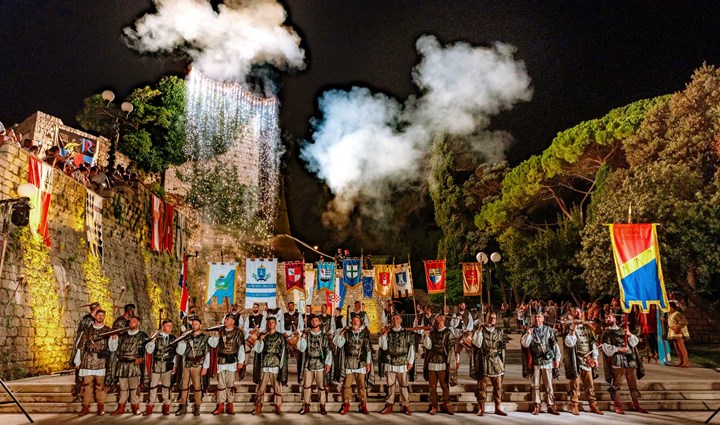
- Rapska fjera – It is the oldest and largest medieval summer festival in Croatia. It is based on a tradition that began in 1364, when the town council of Rab decided to honor King Ljudevit the Great, who liberated Rab from Venetian rule.
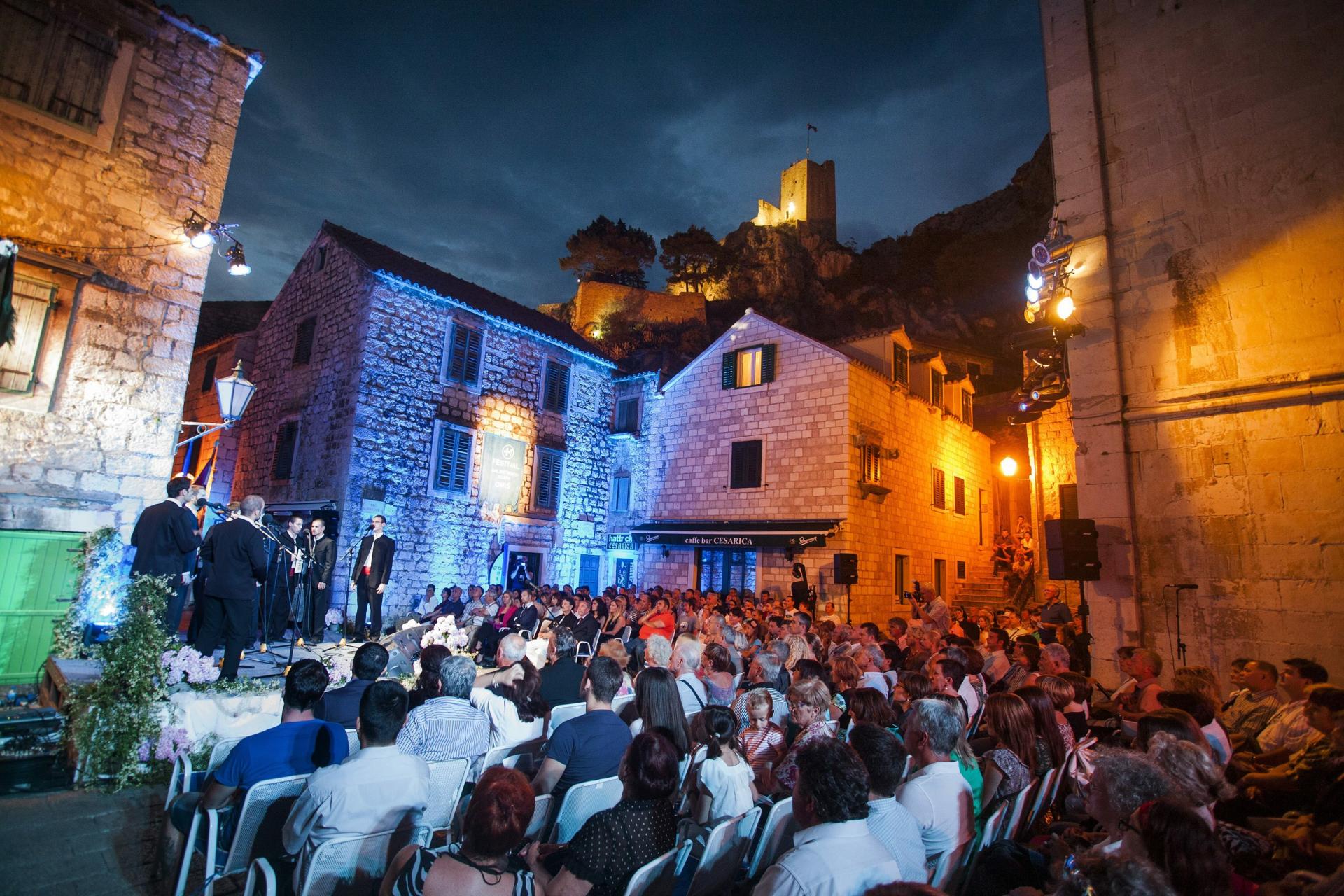
- Festival of Dalmatian klapas – is the most prestigious celebration of klapa — a traditional form of a cappella singing from Dalmatia, inscribed on UNESCO’s List of Intangible Cultural Heritage of Humanity. Held every summer in the historic coastal town of Omiš, the festival gathers the finest male, female, and mixed vocal groups from across Croatia and beyond. For over five decades, this event has preserved and promoted the unique harmonies, poetic lyrics, and heartfelt performances that define Dalmatian cultural identity. On warm summer nights, the streets and squares of Omiš fill with music, as the sound of klapa drifts over the Adriatic Sea, creating an atmosphere you can only experience here.
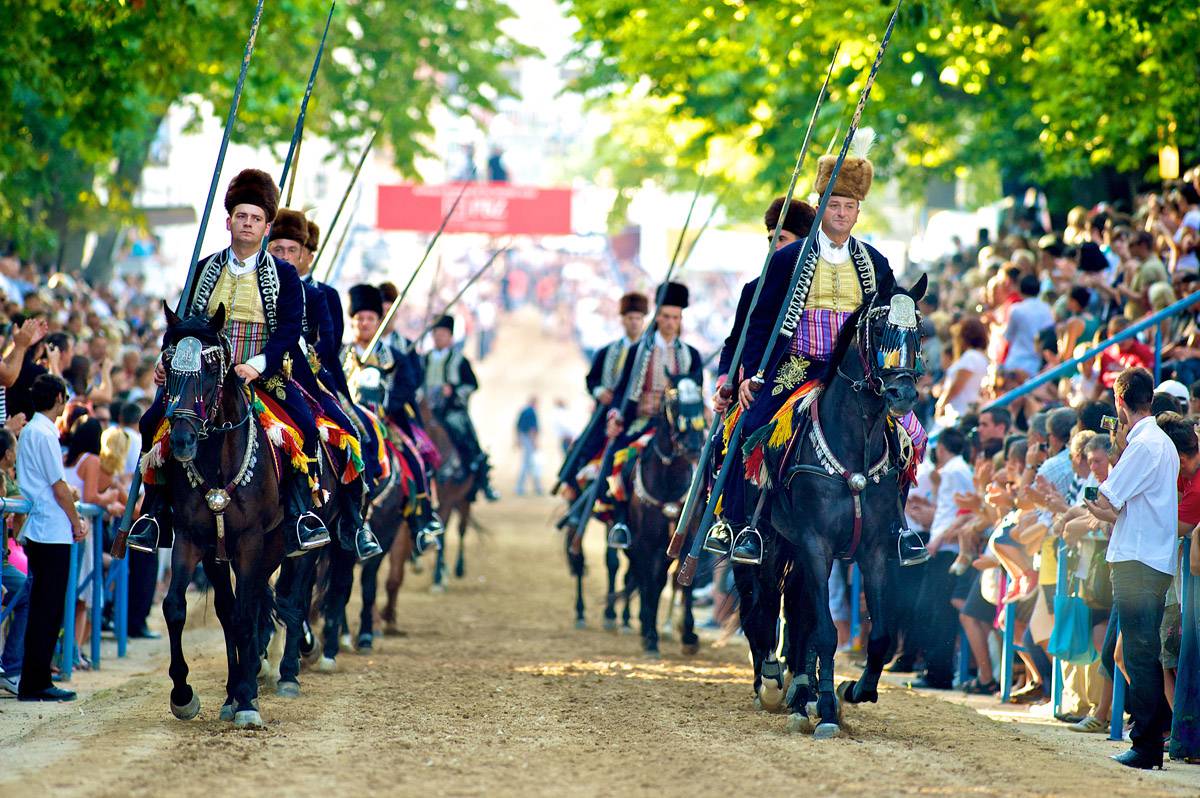
- Sinjska Alka – is a 300-year-old knight’s tournament held every August in the town of Sinj, in the Dalmatian hinterland of Croatia. Riders in traditional uniforms race on horseback down the main street, aiming their lances at a small metal ring called the alka. The event commemorates the victory of the people of Sinj over the Ottoman army in 1715, which locals attribute to the protection of the Virgin Mary of Sinj. Recognized by UNESCO as intangible cultural heritage, the Sinjska Alka is not just a competition — it’s a living piece of history, celebrated with parades, music, and days of festivities.
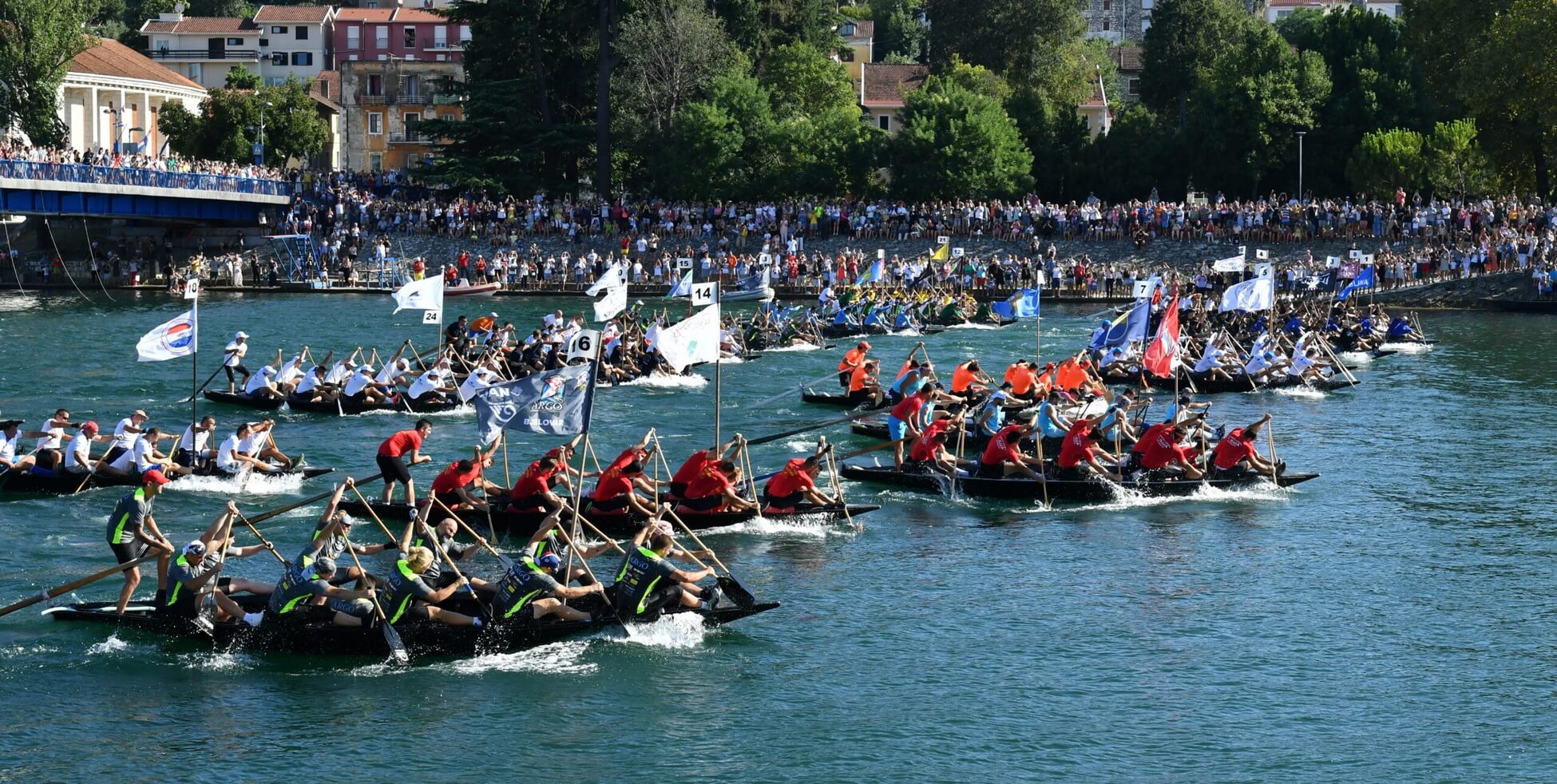
- The Lađa Marathon – amateur competition where old, authentic vessels called lađa are used. The race is from Metković to Ploče – length of 22500 meters. It is the largest and most-watched competition of its sort in Croatia. Recently, it has also been broadcast live on national television.
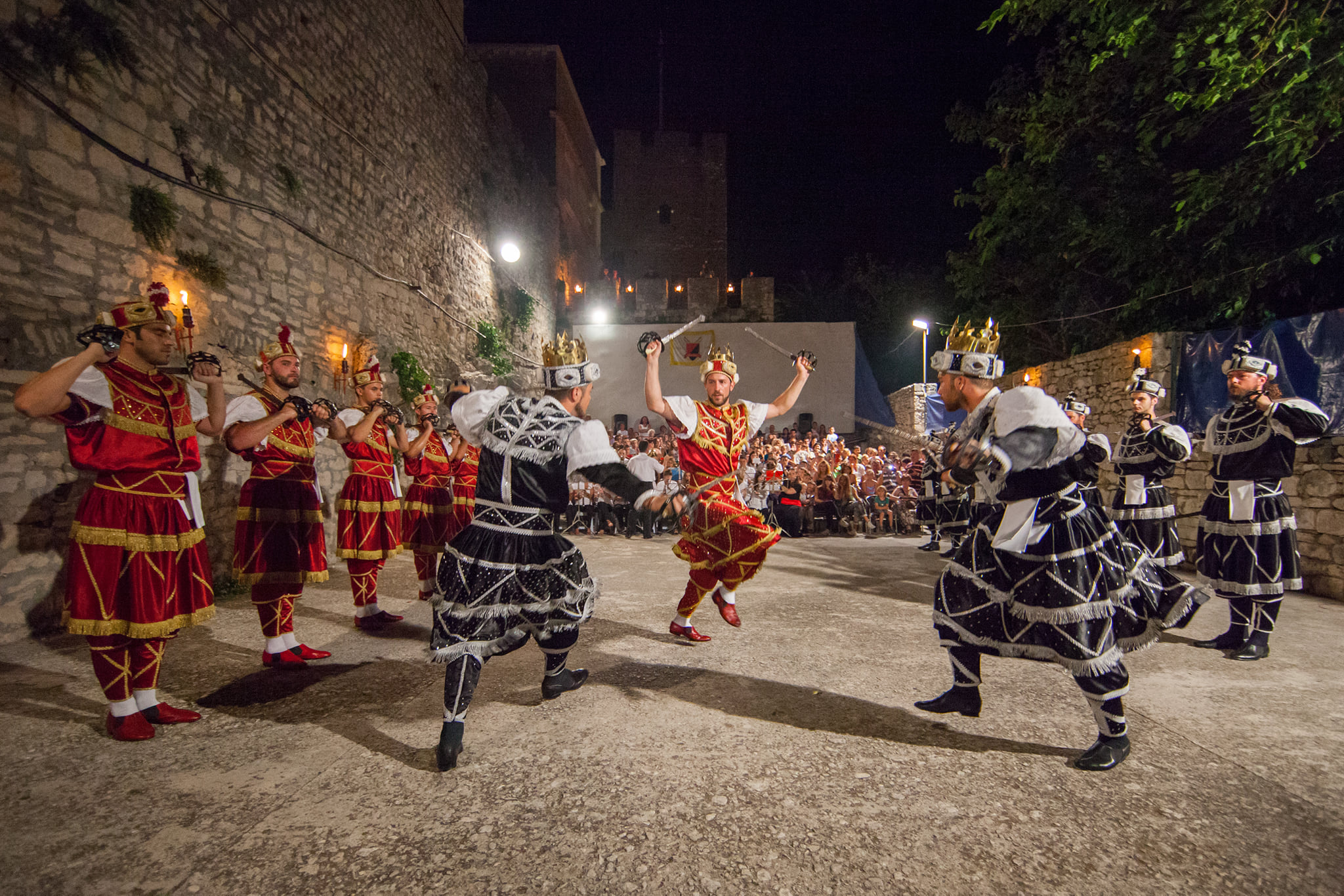
- The Moreška Sword Dance is a unique and dramatic traditional performance from the island of Korčula, Croatia. Dating back over 400 years, it was once performed in many Mediterranean countries, but today it survives almost exclusively in Korčula.
- The dance tells the story of two kings — the White King and the Black King — whose armies clash in a series of choreographed sword battles over the fate of a captured princess. With fast-paced movements, rhythmic music, and the sound of clashing steel, the Moreška is both a theatrical spectacle and a cherished symbol of local heritage. Originally brought to the island from Spain via the Mediterranean trade routes, the Moreška has evolved into a proud Korčula tradition, performed during the town’s annual festivities, especially on St. Theodore’s Day in July.

- Saints’ Fešta’s:
Along the coast, there are numerous local fešta’s dedicated to various saints, such as the Feast of St. Domnius, St. Chrysogonus, St. Lawrence, St. Roch, and the Assumption of Mary on August 15. - Food Fešta’s:
Almost every town also has its own fisherman night, and there are various food festivals, including wine nights, the Tuna fešta, the Shellfish fešta, Fig fešta, Cod Days, and more.” - Local Themed Feasts:
The region also hosts a variety of unique local feasts, such as the Omiš Pirate Battle, the Donkey Races in Tribunj, the Lastovo Carnival Feast, and the Days of Diocletian. - Dalmatia is also rich in music festivals that showcase new songs, including the Split Festival, the Evenings of Dalmatian Chanson in Šibenik, the Evenings of Dalmatian Song in Kaštela, Melodies of the Croatian South in Opuzen, and the Dalmatian Klapa Festival in Omiš.